

Warts and Verruca

These develop on the soles of the feet and grow inwards. They often appear as hard, flat lesions with black specks.
Mosaic warts are a type of plantar wart that appear in clusters, usually on the ball of the feet or toes.
Common Warts
Usually appear on the hands, fingers and sometimes knees.
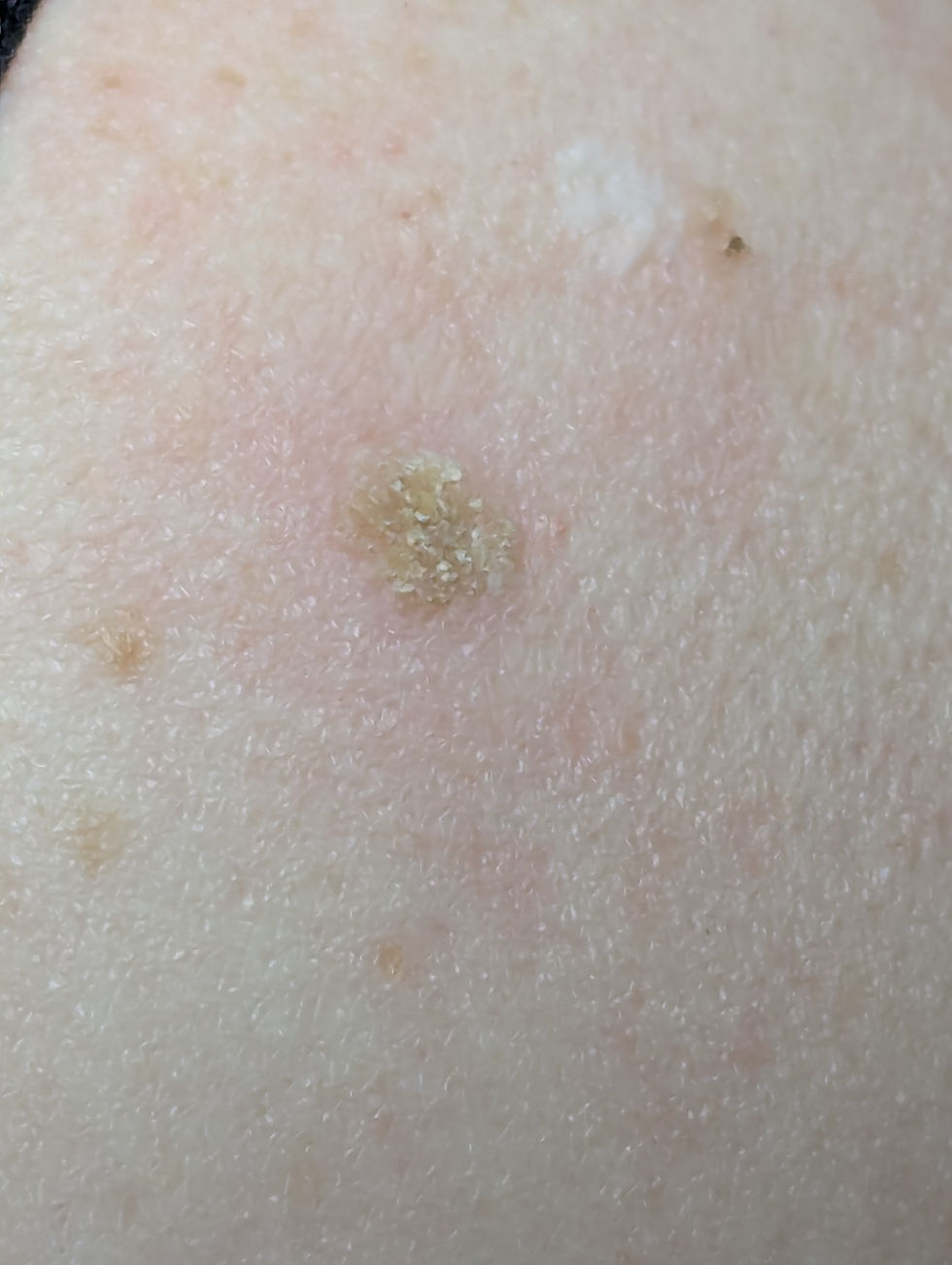
They are thick, rough and grainy looking, often with small black dots. They can rage from 1 millimetre to 1 centimetre in size and may occur alone or in clusters.
Flat Warts
Small, smooth and slightly raised. Often forming in clusters on the face, legs or back of the hands. Common in children and teens and can be pink, light brown or yellowish in colour.
Filiform Warts
Long, narrow and thread like. Typically appearing on the face, eyes and neck. They grow quickly and can be more noticeable due to their elongated shape.
Periungual and Subungual Warts
These grow around or under the fingernails and toenails. Common in nail biters. They often appear as rough, thickened skin around the nails.
How to stop warts and verrucas spreading
Warts and verrucas are caused by a virus. They can be spread to other people from contaminated surfaces or through close skin contact.
You're more likely to spread a wart or verruca if your skin is wet or damaged.
It can take months for a wart or verruca to appear after contact with the virus.
There are things you can do to help stop warts or verrucas spreading to other people.
Do
wash your hands after touching a wart or verruca
change your socks daily if you have a verruca
cover warts and verrucas with a plaster when swimming
take care not to cut a wart when shaving
Don’t
do not share towels, flannels, socks or shoes if you have a wart or verruca
do not bite your nails or suck fingers with warts on
do not walk barefoot in public places if you have a verruca
do not scratch or pick a wart
Treatment
They can be difficult to treat and often need multiple treatments.


Comments